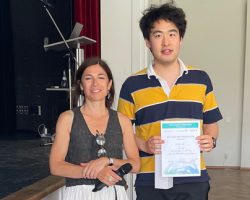
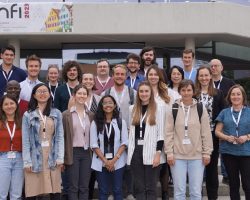
We are delighted to congratulate our PhD students and lab members for their strong presence at the 2024 PhD Symposium. The event, cohosted by the Max Planck Institute for Biology Tübingen, the Friedrich Miescher Laboratory and the University of Tübingen,...
We are happy to announce that Hagay Enav’s powerful new tool SynTracker is now explained in a Nature Biotechnology publication. You can access the open access paper here. A “Research Briefing” explaining how the paper was conceived is here. To...
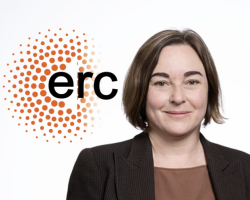
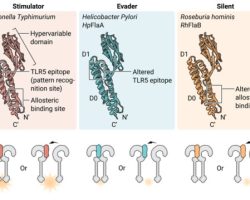
Dr. Ruth Ley, Managing Director at the Max Planck Institute for Biology Tübingen and the Director of the Department of Microbiome Science, is awarded the Advanced Grant by the European Research Council. Silent Flagellin in chronic inflammatory and auto-immune disease...
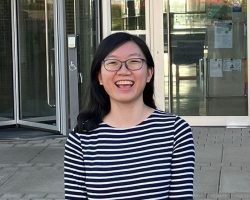
Congratulations to Yi-Han Tan for being selected as one of 59 Post Doctoral Researchers from 28 Nations awarded the presigious Human Frontiers of Science Program (HFSP) Fellowship for 2024. Yi-Han is from Singapore and is doing her post doc with...
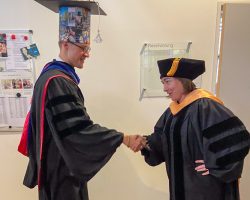
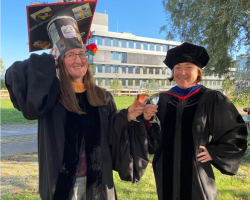
Last month, we celebrated the defense of Ley Lab PhD student, now postodoc, Liam Fitzstevens! He did an amazing job defending his thesis titled ‘Human gut microbes’ transmission, persistence and contribution to lactose tolerance’, and was awarded the highest accolade...
Professor Ruth Ley was awarded the 2023 Charles Donovan Microbiome Prize and delivered the Distinguished International APC Lecture at the 2023 APC Annual Symposium on Friday 27th October. The title of her talk was “A shared evolutionary history for humans...
The latest MAX MAG, our community magazine (Issue 3, 2023), in its “Off the Beaten Track” section, published an article featuring Alex Tyakht, a bioinformatics group leader from our lab. Alex shares the inspiring journey of himself and his wife,...
We are members of the “Controlling Microbes to Fight Infections” (CMFI) Cluster of Excellence at the University of Tübingen. We had a dominant showing at this year’s annual CMFI conference with 12 posters and 2 talks: Ruth gave project-overviews and...
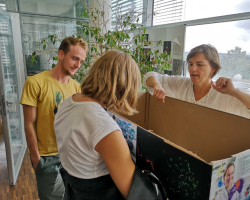
To celebrate the different roles and professional identities at the Max Planck Institute for Biology Tübingen, we all participated in our first every Diversity Day! A day for us to share with each other what we do and contribute to...
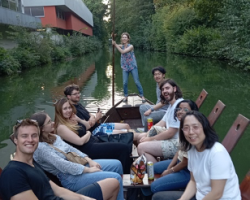
Last week the lab went on its very first Stocherkahn (punting) trip together! Punting on a Stocherkahn along the Neckar river is a common activity during the summer time here in Tübingen, where you can relish in the sunshine and...
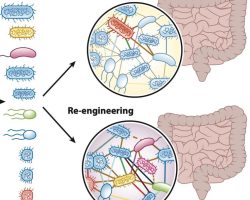
Bringing genetics to the microbiome. Group leader James Marsh and Ph.D student Christian Kirk this week saw the publication of their review in Annual Review of Microbiology: Toward Microbiome Engineering: Expanding the Repertoire of Genetically Tractable Members of the Human...
Congratulations to Sara Clasen, Grand Prize Winner of the NOSTER & Science Microbiome Prize. The NOSTER & Science Microbiome Prize is awarded for the best essay submitted by young investigators in the rapidly evolving field of microbiome research. The prize...
On December 14, Leonardo Moreno successfully defended his thesis, titled “On Bioinformatics of the Human Gut,” for which he earned the distinguished Magna Cum Laude distinction. During his PhD, he correlated bacterial and viral diversity in the human gut, revealing...
In December a portion of the lab traveled to snowy Banff, Canada to attend the Keystone Symposia Meeting “The Human Microbe: Ecology and Evolution.” Ruth presented a talk on the lab’s recent findings on silent recognition of human gut bacterial...
Our recent discovery of silent flagellin in the human gut was featured in Science Immunology: Hannah Baer, Shruti Sandilya and Theodore Steiner: Evading the Toll Booth: How “silent” flagellin may bind yet fail to activate TLR5 The nature of flagellin–Toll-like...
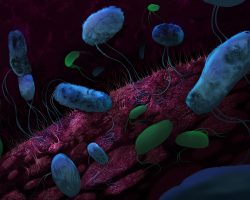
Here, we address the long-standing question of how benign gut microbes evade the immune system. We identified a new type of flagellin in the human gut, termed ‘silent flagellin,’ that binds to the immune receptor Toll-like receptor 5 without inducing...
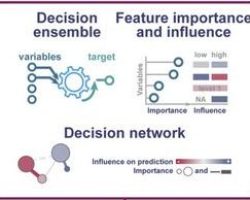
Former graduate student Albane Ruaud recently saw her machine learning tool published in PLoS Comp Bio: Ruaud A, Pfister N, Ley RE, Youngblut ND. Interpreting tree ensemble machine learning models with endoR. PLoS Computational Biology Dec 14;18(12):e1010714. (2022). Use endoR...
Last week, Jessica (Jess) Sutter successfully defended her thesis titled “Phylogeny, pangenomics, and predicted functional diversity of maize rhizosphere Pseudomonas”. The work of Jess investigates a phenomenon observed in a study of the maize rhizosphere microbiome in a field study...
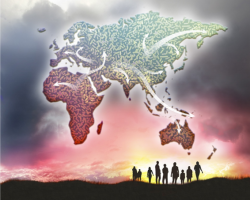
Our new paper on the evolutionary histories of the human gut microbiota is out in Science. The work was led by Taichi Suzuki and Liam Fitzstevens along with the Ley lab team: Victor Schmidt, Hagay Enav, Kelsey Huus, and Mirabeau...
We are delighted to congratulate our PhD students and lab members for their strong presence at the 2024 PhD Symposium. The event, cohosted by the Max Planck Institute for Biology Tübingen, the Friedrich Miescher Laboratory and the University of Tübingen,...
We are happy to announce that Hagay Enav’s powerful new tool SynTracker is now explained in a Nature Biotechnology publication. You can access the open access paper here. A “Research Briefing” explaining how the paper was conceived is here. To...
Dr. Ruth Ley, Managing Director at the Max Planck Institute for Biology Tübingen and the Director of the Department of Microbiome Science, is awarded the Advanced Grant by the European Research Council. Silent Flagellin in chronic inflammatory and auto-immune disease...
Congratulations to Yi-Han Tan for being selected as one of 59 Post Doctoral Researchers from 28 Nations awarded the presigious Human Frontiers of Science Program (HFSP) Fellowship for 2024. Yi-Han is from Singapore and is doing her post doc with...
Last month, we celebrated the defense of Ley Lab PhD student, now postodoc, Liam Fitzstevens! He did an amazing job defending his thesis titled ‘Human gut microbes’ transmission, persistence and contribution to lactose tolerance’, and was awarded the highest accolade...
Professor Ruth Ley was awarded the 2023 Charles Donovan Microbiome Prize and delivered the Distinguished International APC Lecture at the 2023 APC Annual Symposium on Friday 27th October. The title of her talk was “A shared evolutionary history for humans...
The latest MAX MAG, our community magazine (Issue 3, 2023), in its “Off the Beaten Track” section, published an article featuring Alex Tyakht, a bioinformatics group leader from our lab. Alex shares the inspiring journey of himself and his wife,...
We are members of the “Controlling Microbes to Fight Infections” (CMFI) Cluster of Excellence at the University of Tübingen. We had a dominant showing at this year’s annual CMFI conference with 12 posters and 2 talks: Ruth gave project-overviews and...
To celebrate the different roles and professional identities at the Max Planck Institute for Biology Tübingen, we all participated in our first every Diversity Day! A day for us to share with each other what we do and contribute to...
Last week the lab went on its very first Stocherkahn (punting) trip together! Punting on a Stocherkahn along the Neckar river is a common activity during the summer time here in Tübingen, where you can relish in the sunshine and...
Bringing genetics to the microbiome. Group leader James Marsh and Ph.D student Christian Kirk this week saw the publication of their review in Annual Review of Microbiology: Toward Microbiome Engineering: Expanding the Repertoire of Genetically Tractable Members of the Human...
Congratulations to Sara Clasen, Grand Prize Winner of the NOSTER & Science Microbiome Prize. The NOSTER & Science Microbiome Prize is awarded for the best essay submitted by young investigators in the rapidly evolving field of microbiome research. The prize...
On December 14, Leonardo Moreno successfully defended his thesis, titled “On Bioinformatics of the Human Gut,” for which he earned the distinguished Magna Cum Laude distinction. During his PhD, he correlated bacterial and viral diversity in the human gut, revealing...
In December a portion of the lab traveled to snowy Banff, Canada to attend the Keystone Symposia Meeting “The Human Microbe: Ecology and Evolution.” Ruth presented a talk on the lab’s recent findings on silent recognition of human gut bacterial...
Our recent discovery of silent flagellin in the human gut was featured in Science Immunology: Hannah Baer, Shruti Sandilya and Theodore Steiner: Evading the Toll Booth: How “silent” flagellin may bind yet fail to activate TLR5 The nature of flagellin–Toll-like...
Here, we address the long-standing question of how benign gut microbes evade the immune system. We identified a new type of flagellin in the human gut, termed ‘silent flagellin,’ that binds to the immune receptor Toll-like receptor 5 without inducing...
Former graduate student Albane Ruaud recently saw her machine learning tool published in PLoS Comp Bio: Ruaud A, Pfister N, Ley RE, Youngblut ND. Interpreting tree ensemble machine learning models with endoR. PLoS Computational Biology Dec 14;18(12):e1010714. (2022). Use endoR...
Last week, Jessica (Jess) Sutter successfully defended her thesis titled “Phylogeny, pangenomics, and predicted functional diversity of maize rhizosphere Pseudomonas”. The work of Jess investigates a phenomenon observed in a study of the maize rhizosphere microbiome in a field study...
Our new paper on the evolutionary histories of the human gut microbiota is out in Science. The work was led by Taichi Suzuki and Liam Fitzstevens along with the Ley lab team: Victor Schmidt, Hagay Enav, Kelsey Huus, and Mirabeau...