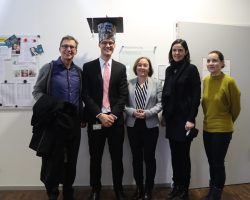
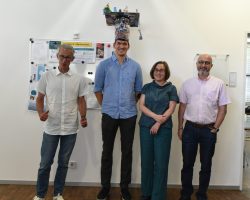
May 27, 2026 The Royal Society has elected Ruth Ley, Director of the Department of Microbiome Science at the Max Planck Institute for Biology Tübingen, as a Fellow in recognition of her achievements in the field of microbiome science. Fellows...
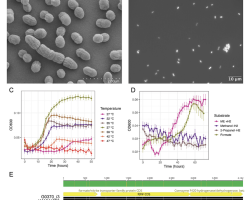
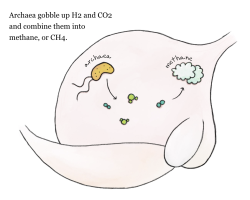
We are pleased to announce the publication of our latest study, “Genomic and phenotypic characterization of a human gut Methanobrevibacter intestini strain G0370_i3 isolated in Gabon.” In this work, we report the isolation and in-depth characterization of a human gut...
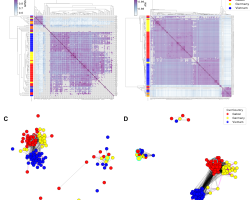
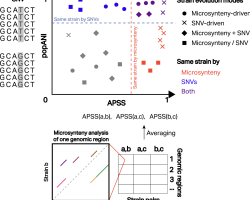
We present StrainVis, a new web-based tool designed to simplify and unify strain-level analysis of microbiome data.Microbial species include multiple strains differing in their genotype, as a result of accumulation of both single nucleotide variants (SNVs) and larger structural genomic...
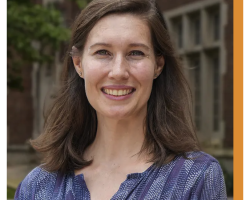
We are beyond thrilled and proud that our very own Kelsey Huus will join the faculty of the University of Ottawa as Assistant Professor & Tier 2 Canada Research Chair in the Department of Nutrition. Kelsey obtained her Ph.D with...
Our Department has two of the 66 Highly Cited researchers from the Max Planck Society! What are the odds? (Tony and Ruth) Explore the list here. “Analysts from the Institute for Scientific Information (ISI) at Clarivate recognized 6,868 individuals with...
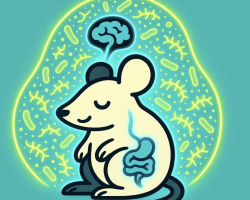
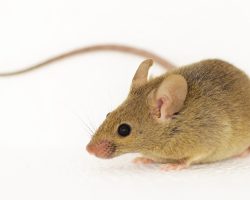
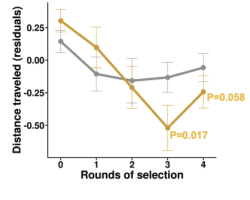
Passing Traits Without Genes: How the Gut Microbiome Transfers Behavior Microbes can evolve faster than their hosts. We show that selecting only the microbiome, while keeping host genes fixed, can alter mouse behavior across generations. Microbes and their metabolites thus...
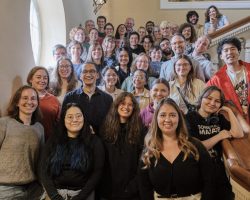
Mid of July our lab retreat took place at the the Max Planck Castle: Schloss Ringberg. Our Lab retreat this year was truly something special. In the picturesque and academic environment of Schloss Ringberg, built by the money and minds...
Graduate student Anna Bogdanova has constructed a machine learning model to predict whether a bacterial flagellin is likely to bind to and/or activate the TLR5 receptor in the human gut. She developed FlaPro, a computational pipeline for quantifying flagellins in...
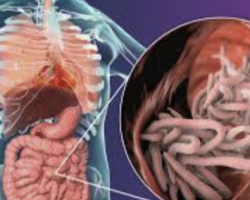
Graduate Student Mirabeau Ngwese analyzed gut microbiomes that he obtained in Gabon for the diversity of soil transmitted helminths (STH) and the microbiome. He generated metagenomes and performed microscopy and qPCR for the STHs. For three of the four STHs,...
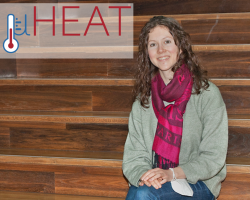
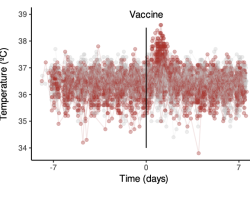
New Preprint! Kelsey Huus led the µHEAT (Microbial-Human Ecology And Temperature) study aimed at understanding how the microbiome affects response to vaccine. She assessed 171 healthy people receiving their SARS-CoV-2 vaccination. Roughly half had elevated temperature right after the vaccine....
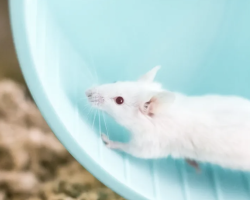
New preprint on BiorXiv! Suzuki et al. show that the gut microbiome can drive phenotypic plasticity in a mammal, that a phenotype can then be selected, and the trait passed to a new host without selection on the host genome....
Post Doc Tony Walters is one of 6886 worldwide most highly cited researchers! As described by Clarivate: Each Highly Cited Researcher (HCR) selected has authored multiple Highly Cited Papers which rank in the top 1% by citations for their field(s)...
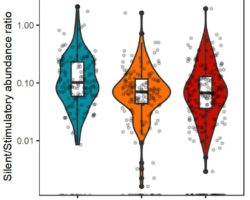
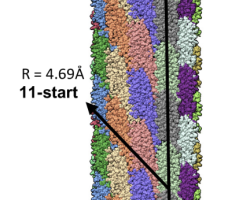
In this preprint “Kinetic and structure-based comparisons of silent and stimulatory flagellin interactions with TLR5” by Bell et al., our most recently graduated graduate student Michael Bell reveals his cryo-EM structure of the silent flagellin FlaB from Roseburia hominis, the...
The Reinhard and Maria Teufel Stiftung recognizes outstanding PhD theses in biology. Out of 9 awards handed out this year, 2 go to former PhD students of the Max-Planck Institute for Biology. Ley lab former PhD student, Liam Fitzstevens, won...
Former Post-Doc Sara Clasen is now a tenure-track Assistant Professor of Microbiology at the University of Tennessee in Knoxville! Read all about her new lab! Her research program delves into fundamental questions of microbiota-host immune interactions.
We were happy to see Hagay Enav’s Nature Biotechnology paper introducing the use of microsynteny for strain comparisons with the development of the tool SynTracker featured in Cell Reports Methods. Peiwan Cai and Tal Koren from the Columbia University Irving...
Our very own James Marsh was quoted in the Washington Post this week in an article about engineering the gut microbiome to reduce methane emissions from cows: “James Marsh, a professor of microbiome engineering at the Max Planck Institute for...
We are happy to celebrate the graduation of our PhD student (now postdoc) Michael Bell! Michael did fantastic job defending his thesis titled ‘Investigating the Structure-Function Relationships Between Flagellins and Toll-Like Receptor 5′. All of us in the Ley Lab...
May 27, 2026 The Royal Society has elected Ruth Ley, Director of the Department of Microbiome Science at the Max Planck Institute for Biology Tübingen, as a Fellow in recognition of her achievements in the field of microbiome science. Fellows...
We are pleased to announce the publication of our latest study, “Genomic and phenotypic characterization of a human gut Methanobrevibacter intestini strain G0370_i3 isolated in Gabon.” In this work, we report the isolation and in-depth characterization of a human gut...
We present StrainVis, a new web-based tool designed to simplify and unify strain-level analysis of microbiome data.Microbial species include multiple strains differing in their genotype, as a result of accumulation of both single nucleotide variants (SNVs) and larger structural genomic...
We are beyond thrilled and proud that our very own Kelsey Huus will join the faculty of the University of Ottawa as Assistant Professor & Tier 2 Canada Research Chair in the Department of Nutrition. Kelsey obtained her Ph.D with...
Our Department has two of the 66 Highly Cited researchers from the Max Planck Society! What are the odds? (Tony and Ruth) Explore the list here. “Analysts from the Institute for Scientific Information (ISI) at Clarivate recognized 6,868 individuals with...
Passing Traits Without Genes: How the Gut Microbiome Transfers Behavior Microbes can evolve faster than their hosts. We show that selecting only the microbiome, while keeping host genes fixed, can alter mouse behavior across generations. Microbes and their metabolites thus...
Mid of July our lab retreat took place at the the Max Planck Castle: Schloss Ringberg. Our Lab retreat this year was truly something special. In the picturesque and academic environment of Schloss Ringberg, built by the money and minds...
Graduate student Anna Bogdanova has constructed a machine learning model to predict whether a bacterial flagellin is likely to bind to and/or activate the TLR5 receptor in the human gut. She developed FlaPro, a computational pipeline for quantifying flagellins in...
Graduate Student Mirabeau Ngwese analyzed gut microbiomes that he obtained in Gabon for the diversity of soil transmitted helminths (STH) and the microbiome. He generated metagenomes and performed microscopy and qPCR for the STHs. For three of the four STHs,...
New Preprint! Kelsey Huus led the µHEAT (Microbial-Human Ecology And Temperature) study aimed at understanding how the microbiome affects response to vaccine. She assessed 171 healthy people receiving their SARS-CoV-2 vaccination. Roughly half had elevated temperature right after the vaccine....
New preprint on BiorXiv! Suzuki et al. show that the gut microbiome can drive phenotypic plasticity in a mammal, that a phenotype can then be selected, and the trait passed to a new host without selection on the host genome....
Post Doc Tony Walters is one of 6886 worldwide most highly cited researchers! As described by Clarivate: Each Highly Cited Researcher (HCR) selected has authored multiple Highly Cited Papers which rank in the top 1% by citations for their field(s)...
In this preprint “Kinetic and structure-based comparisons of silent and stimulatory flagellin interactions with TLR5” by Bell et al., our most recently graduated graduate student Michael Bell reveals his cryo-EM structure of the silent flagellin FlaB from Roseburia hominis, the...
The Reinhard and Maria Teufel Stiftung recognizes outstanding PhD theses in biology. Out of 9 awards handed out this year, 2 go to former PhD students of the Max-Planck Institute for Biology. Ley lab former PhD student, Liam Fitzstevens, won...
Former Post-Doc Sara Clasen is now a tenure-track Assistant Professor of Microbiology at the University of Tennessee in Knoxville! Read all about her new lab! Her research program delves into fundamental questions of microbiota-host immune interactions.
We were happy to see Hagay Enav’s Nature Biotechnology paper introducing the use of microsynteny for strain comparisons with the development of the tool SynTracker featured in Cell Reports Methods. Peiwan Cai and Tal Koren from the Columbia University Irving...
Our very own James Marsh was quoted in the Washington Post this week in an article about engineering the gut microbiome to reduce methane emissions from cows: “James Marsh, a professor of microbiome engineering at the Max Planck Institute for...
We are happy to celebrate the graduation of our PhD student (now postdoc) Michael Bell! Michael did fantastic job defending his thesis titled ‘Investigating the Structure-Function Relationships Between Flagellins and Toll-Like Receptor 5′. All of us in the Ley Lab...